.png)
Piezoelectric Mechanisms and Kinetic concrete; Large Cities' new Form of Passive Energy

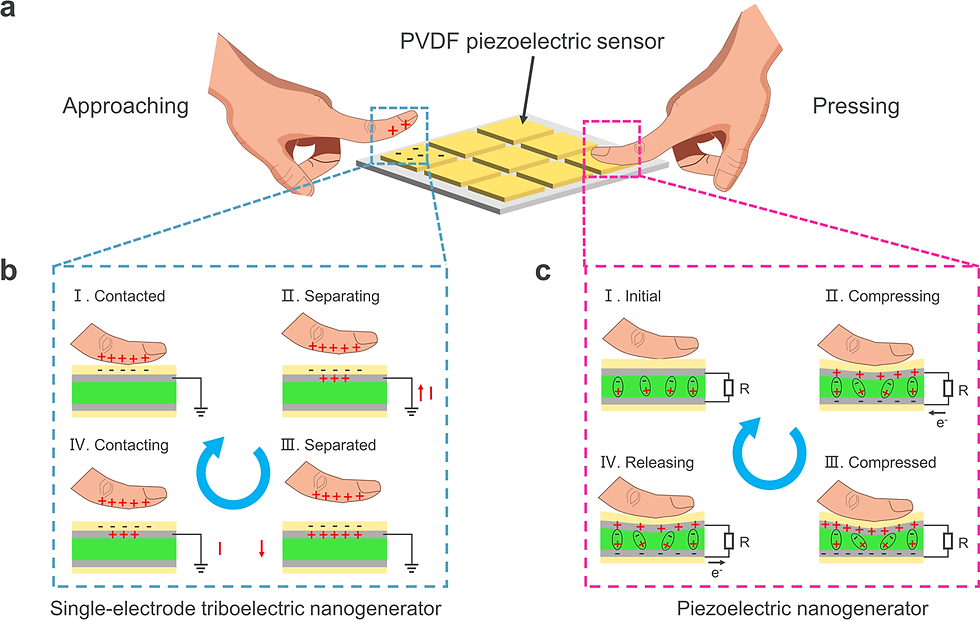
A new form of passive renewable energy is gaining attention in urban planning circles: piezoelectric, or kinetic, concrete tiles that generate electricity from movement or pressure. These systems rely on the piezoelectric effect, in which certain materials produce an electric charge when mechanical pressure is applied. According to Wikipedia, piezoelectricity occurs when “mechanical stress induces an electrical charge in solid materials,” a principle now being adapted for sidewalks, plazas, and transit hubs where pedestrian traffic is constant. This emerging technology is being promoted as a way to turn everyday movement into usable power.
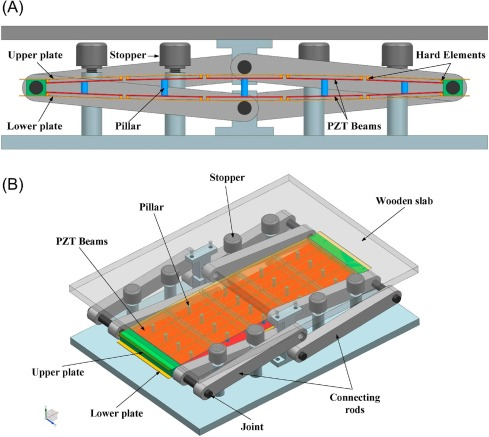
Recent studies and pilot projects suggest that while a single footstep produces only a small amount of electricity, the cumulative impact can be significant in high-traffic areas. Daniel Fung writes that “hundreds or even thousands of footsteps per minute can meaningfully contribute to local energy systems when integrated with solar panels and data networks.” Installations such as kinetic pavements and energy-generating stairs have already been tested in public spaces, demonstrating their potential as a supplemental power source for lighting, sensors, and smart-city infrastructure.
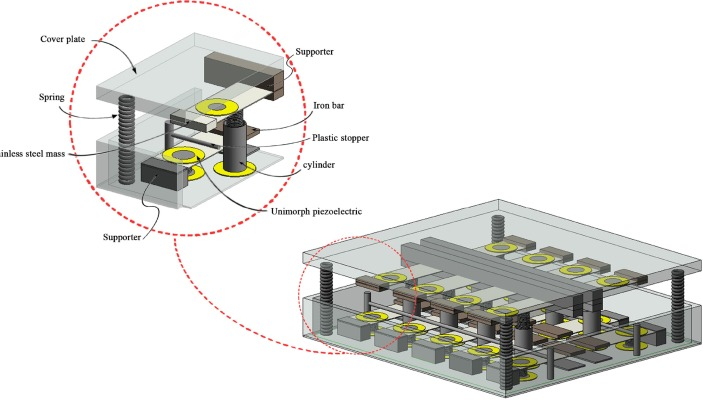
Energy Floors, a company specializing in this technology, notes that pedestrian energy is “not a replacement for traditional renewables, but a valuable addition to sustainable urban design.” This form of energy is not new either, as escalators have, for a long time, used descending people to generate power using regenerative braking. Researchers and architects argue that kinetic paving fits into a broader movement toward adaptive and sustainable design. A study published in IOP Conference Series describes kinetic pavement as “an environmentally friendly solution for urban areas with high pedestrian density,” emphasizing its low emissions and renewable nature. This also creates one more way the massive cities or "concrete jungles" could be less harming toward the environment.
Unfortunately, this tech does have many downsides,
Low power output
They generate very small amounts of electricity, so they’re not practical for large-scale power generation.
High material cost
Common piezo materials (like PZT ceramics) can be expensive and sometimes rely on rare or toxic elements.
Mechanical fragility
Piezoelectric ceramics are brittle and can crack under repeated or excessive stress.
Efficiency depends on precise loading
They work best at specific frequencies and forces; outside those conditions, performance drops fast.
Complex construction process
Requires specialized design, sensors, and wiring, making it harder to scale or retrofit into existing structures.
While not entirely detrimental, these downsides need really big workarounds to be cost-effective. The worst offenders are high material cost and mechanical fragility. They are especially bad because they are a feedback loop; it costs a lot to build, then breaks quickly, and then it takes a lot of money to repair. unfortunately while an insanely cool technology, I would not expect to see this exist in my lifetime.
Bibliography:
Ansori, I., and Wanita S. Abioso. 2020. “Energy Utilization of Kinetic Paving
Technology.” IOP Conference Series: Materials Science and Engineering 871, no.
no. 1 (August). https://iopscience.iop.org/article/10.1088/1757-
Fung, Daniel. 2025. “Smart Cities Could Run on Your Footsteps — Here's How.”
“How to Gain Energy from Pedestrians | Smart City Solutions |.” 2023. Energy Floors.
“Piezoelectricity.” n.d. Wikipedia. Accessed February 10, 2026.
Razaz, E. Z. 2010. “Sustainable Vision of Kinetic Architecture.” Journal of Building
Appraisal Journal of Building Appraisal 5 (no. 4): 341–56.

Simon Belda is a junior in high school, and they are in their first year with the Poudre Press. They are known for being a leader on the robotics team, and they enjoy experiencing the natural and mechanical worlds through photography. After high school, they plan to attend an engineering college for aerospace engineering.


Comments